
May 2, 2026
Stop hand-encoding inventory adjustments — so analysts judge stock, not lots
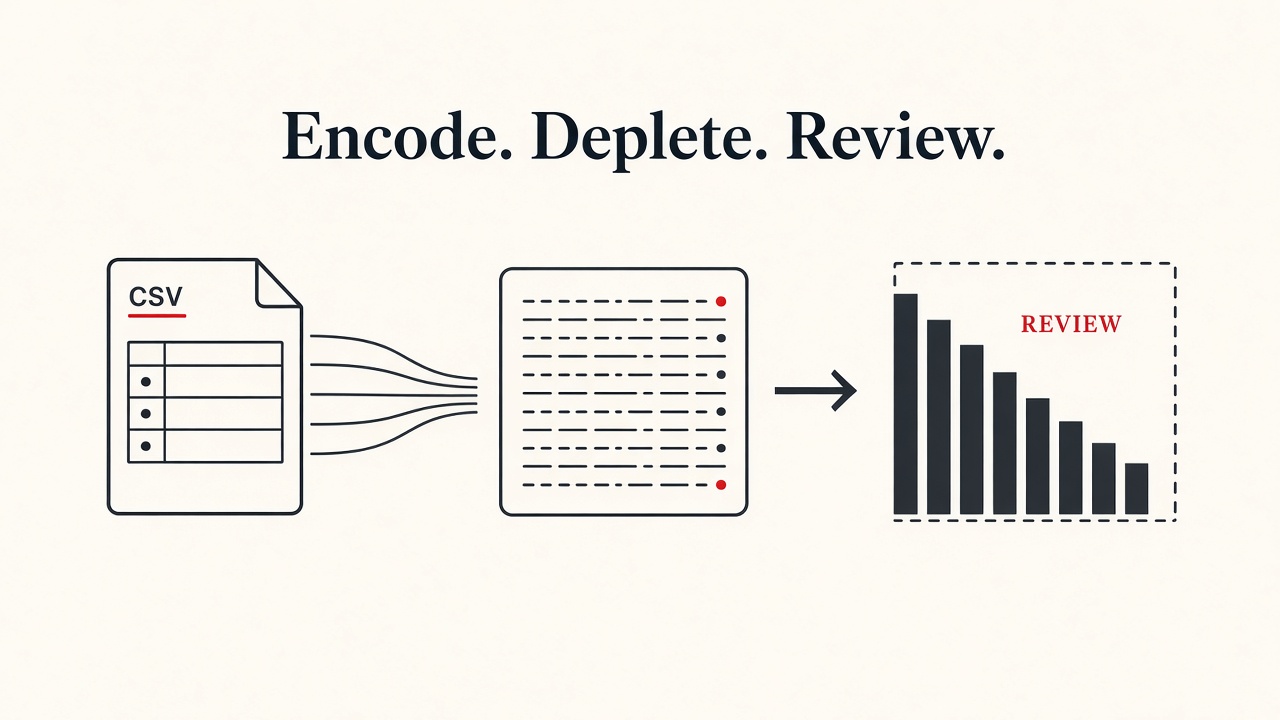
I rarely start inventory fixes with “drop boxes on a workflow canvas.”
I start with:
- What is the purpose — trust the shelf, the books, and profitable sales?
- Who pays when stock lies — analysts, books, operations?
- What is only labor, and what must stay human?
- What does “done” look like if people judge stock truth, not every field?
Inventory is not a back-office detail. It shapes whether sales are profitable and whether day-to-day operations work. When the system says you have stock and the shelf does not, you sell what you do not have or you hide losses. You cannot run the business with confidence.
Context
The problem I was solving
The client already had an ERP and point-of-sale at the branches. Sales and transactions recorded. ERP on-hand did not update from those sales. So the team counted stock by hand and posted inventory adjustments in the ERP so branch numbers matched what was on the shelf.
That loop was correct. It was also relentless.
- Every branch needed shelf truth, not only headquarters
- The same adjustment work, week after week
- More than 40 hours per week of manual updating before analysis starts
- Fatigue where wrong stock hurts sales and margins
Errors came from volume and repetition, not from missing process. The business needed accurate inventory to know profit from loss. The grind stole the time to think.
What we already had
We already had sales data, branch structure, and people who knew the manual adjustment loop cold. What we lacked was a custom automation tool that removed the clerk middle and left humans on judgment.
What I ruled out
ERP API
A clean API would be ideal. The ERP is old. It has no API path we can rely on. Waiting on a vendor rebuild was not a plan for this client.
Generic workflow canvas
A canvas-style workflow builder looked tempting. It was the wrong fit. This ERP screen behavior is custom. Lot rules and branch workflows belong to this business. A drag-and-drop template pretends every ERP is the same. It is not.
Perfect integration first
The client cannot pause operations until point-of-sale and ERP magically sync. They needed shelf truth now. Custom automation had to meet the ERP they already ran.
How I came up with the solution
The question was not “which no-code automation product?” It was this: if sales already happen in point-of-sale, why are people still the glue between every count and the books?
sales at point of sale
        │
        ▼
ERP stock does not move by itself
        │
        ▼
branches count and adjust inventory for shelf truth
        │
        ▼
custom automation runs tedious updates
        │
        ▼
analysts judge exceptions; some wait on slow ERP
So I built a business-tailored tool for this company. It runs the tedious posting work the team used to do by hand. People stay on the call: did automation get this row right?
What I proposed
Custom automation on a fixed ERP
The tool fits this ERP and this adjustment loop. It is not a generic product you reconfigure for any industry overnight. Code the business rules once. Reuse them as branches and volume grow.
What automation takes
Automation handles the repetitive updates people used to type and reconcile line by line. That is the clerk labor the project aimed to remove.
What stays human
Analysts, books, and operations still judge outcomes. They review exceptions. They decide when the numbers look wrong. We almost removed the manual loop entirely. We did not. Human touch stays on technical judgment.
Observability
When something fails, guessing is not enough. The team needs to see what ran and what failed. Reviewers judge stock truth. Engineers debug machinery.
The benchmark
Manual updating consumed more than 40 hours per week. After automation, about 40% of that time remains. That slice is mostly analysis and waiting on a slow platform, not hand-keying every adjustment. The tedious middle shrank. Judgment got the hours back.
Limits I stay honest about
- The ERP is still slow. Automation does not speed up the platform itself.
- Exceptions still need a person. Automation removes the grind. It does not remove the call.
- The team still knows the manual loop. When the ERP changes or maintenance hits, ops can fall back by hand.
- This is not a full ERP replacement. It is custom tooling for this client’s inventory adjustment work.
- A canvas-style automation product will not absorb these screen quirks for free. The tailoring is the point.
What “done” means
Not “a workflow diagram looks pretty.”
- Branch shelf truth and ERP stock align enough to run sales and operations
- Manual updating no longer burns more than 40 hours per week
- About 40% of the old time goes to analysis and platform wait, not clerk encoding
- Analysts spend time on stock judgment and the books, not on retyping every line
- The business can see profit and loss with inventory it trusts
If those hold, the tool did its job. It ended most of the hand-encoding loop for this business — coded where it must be, so people work as analysts again.