
March 21, 2026
Block domains at DNS — infrastructure defense in depth
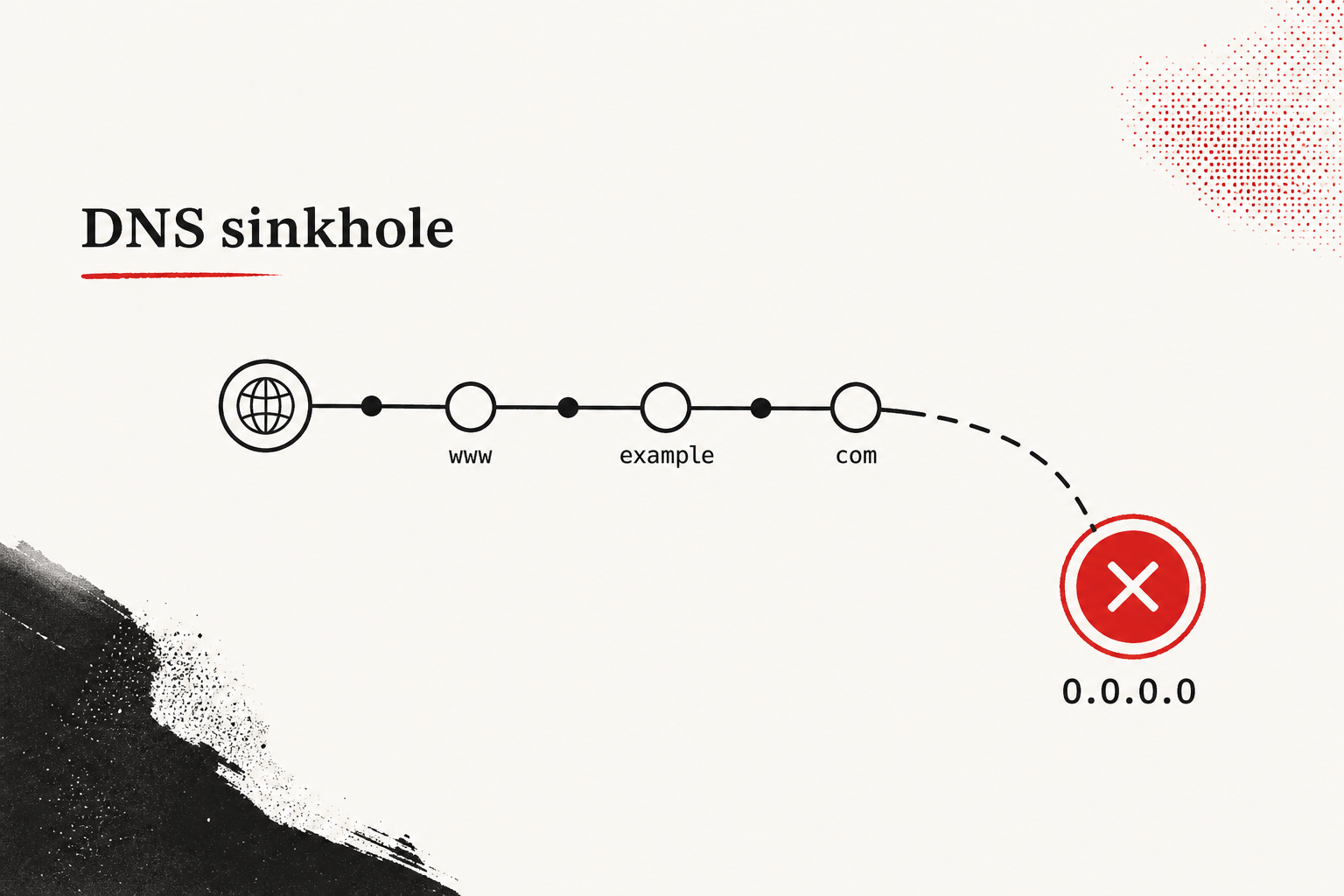
I rarely start domain blocking with “which zone wizard?”
I start with:
- What is the purpose?
- What still works when the endpoint agent misses?
- Where do domain-joined clients already resolve names?
- What must fail before a TCP session even starts?
Endpoint security matters. It is not the whole system. If a name you do not want still resolves to a real IP, the client already has a usable path. For traffic that uses internal DNS, I want that path to die at resolution.
Context
The easy path
Rely on the agent alone — “it will catch it.”
Why that is not enough
- Workstations already point at Active Directory DNS.
- Agents miss cases. That is normal operations, not a surprise.
- A live DNS answer means the connection can start.
- A block that lives on only one domain controller is fragile.
How I look at the system
Without a sinkhole:
client asks for a bad name
        →  DNS returns a real IP
        →  TCP can start
        →  the agent may or may not stop it
So I treat DNS as another place the path can fail early. It is not a replacement for the agent.
What I proposed
An AD DNS sinkhole: apex and wildcard to 0.0.0.0, replicated, dynamic updates off.
query:  bad.example / *.bad.example
answer: 0.0.0.0
What makes it a real control
- Block at AD DNS — clients already trust it. You do not invent a new resolver.
- Apex and wildcard both to
0.0.0.0— the base name and subdomains fail the same way. - Dynamic updates off — the blocklist must not rewrite itself quietly.
- Replicate across domain controllers — one DC down must not remove the control.
Why not “only buy a better agent”?
Keep the agent. Add the sinkhole. Defense in depth here means a second early fail, not another product pitch.
Limits I stay honest about
A sinkhole is useful. It is not complete.
- Public DNS, some VPNs, and DNS over HTTPS can bypass local answers. That needs policy elsewhere.
- Local cache can delay the change. If you change the sinkhole, flush DNS with
ipconfig /flushdns, then look at the answers. - A huge custom blocklist empire is usually overkill. Start with names you actually need to stop.
- DNS alone does not “secure the company.” It is one early fail in a wider stack.
The bar: for clients on internal DNS, deny a usable answer, document what still bypasses you, keep endpoint tools.
What “done” means
Not “the zone exists.”
From a domain-joined client still using internal DNS:
ipconfig /flushdns
nslookup example.com
nslookup anything.example.com
Both return 0.0.0.0, and the browser fails to connect.
That is the outcome I care about: no usable path at resolution, with clear limits on the edges.